Project Type
Self-Initiated Concept Study
Tools
Figma
Core Pillars
Behavioural Psychology
AI Ethics
Information Architecture
Glimpse: Reclaiming the Human Narrative in Social Media
Designing for digital civility by addressing the erosion of empathy in online spaces. Glimpse reimagines digital discourse by utilising AI-driven empathy nudges and intentional friction to address the prevalance of toxic discourse and thus, to shift user behaviour from passive consumption to mindful, authentic interaction.
Problem
Discovery
The Erosion of Mindful Discourse: Modern social interfaces prioritise speed and engagement "at all costs," often at the expense of human empathy. This creates an empathy gap —where the lack of social cues and the speed of interaction lead to dehumanised and toxic discourse.
The Erosion of Authenticity: Modern social platforms often prioritise "highlight reels," creating an environment of performative pressure. This focus on curated personas leads to a lack of authentic human connection and a rise in social comparison.
The Erosion of Agency: Current social ecosystems are designed for infinite, passive consumption. By prioritising algorithmic "relevance" over chronological order, platforms keep users in a state of constant dopamine-seeking, leading to algorithmic fatigue — a sense of burnout where users feel they have lost control over their own digital time and attention. This lack of agency degrades the user’s mental state and reduces the quality of their interactions.
Strategic Objectives
Rather than solving every social media "bug," I focused on three key pillars:
De-escalating Toxicity: Moving from reactive banning to proactive "Empathy Nudging."
Curbing Algorithmic Fatigue: Reintroducing user agency through a 24-hour chronological journalling model.
Authentic Self-Expression: Moving past "Influencer-centric" grids toward personalised, value-driven "Guides."
Design Proposals & Rationale
01
Behavioural Nudges and Intentional Friction
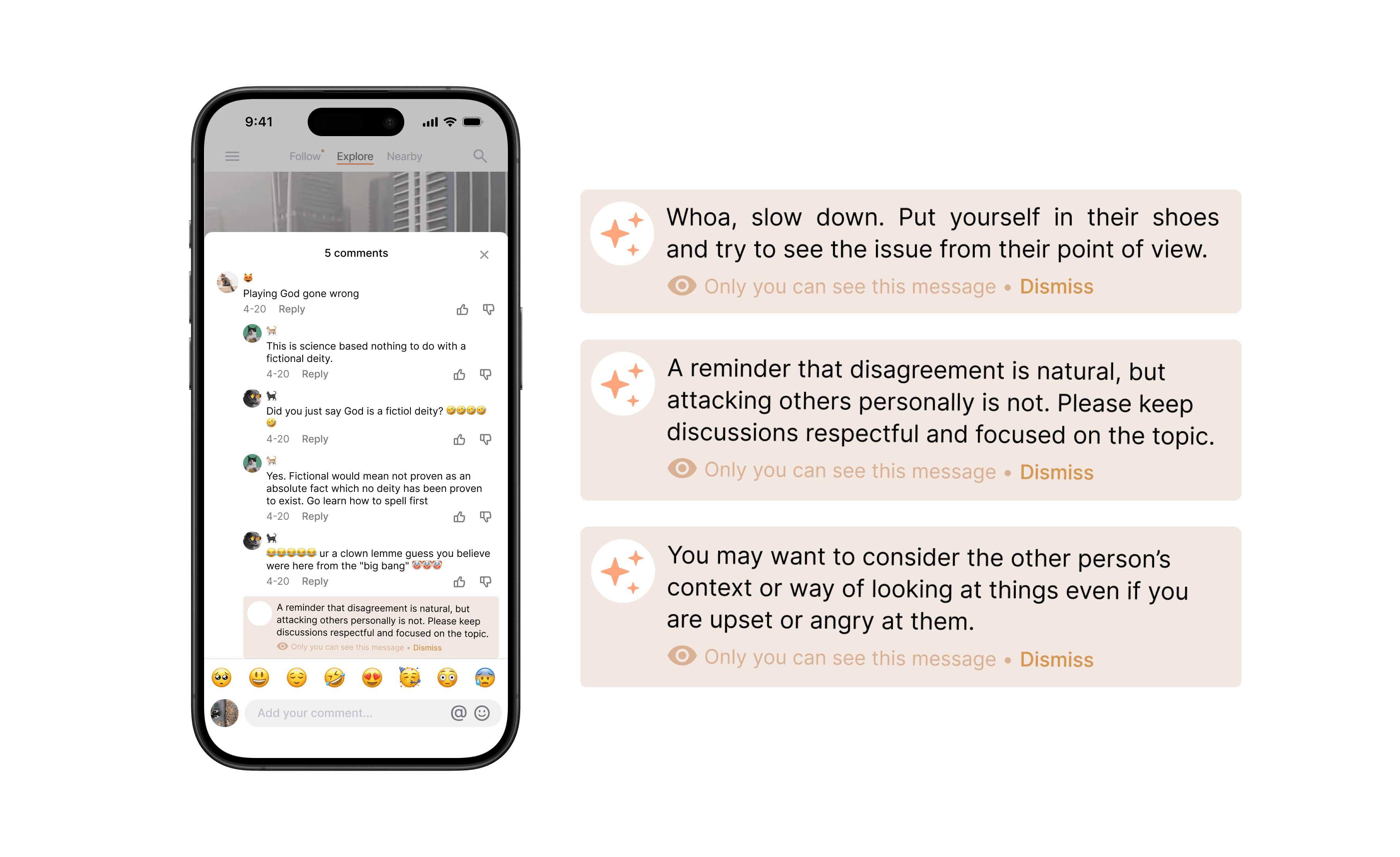
The Problem: Comment sections often become echo chambers of ad hominem attacks because the interface rewards speed over reflection.
The Solution: AI-Enabled Empathy Nudges
Once a comment is posted, Glimpse utilises an AI layer that analyses sentiment in real-time. If a comment is flagged as high-toxicity, the system delivers a "Friction Nudge" — a gentle, non-restrictive reminder to fact-check or rephrase, thereby promoting a more mindful digital experience.
02
Reimagining the Feed: The 24-Hour Timeline
The Problem: Algorithmic feeds create a sense of "infinite scroll" that leads to social comparison and anxiety.
The Solution: A digital journal format that complements traditional social media habits by offering a 24-hour chronological grid. This serves as a functional sanctuary that breaks the momentum of doom-scrolling while encouraging users to celebrate everyday, "unpolished" moments rather than curated highlights.
03
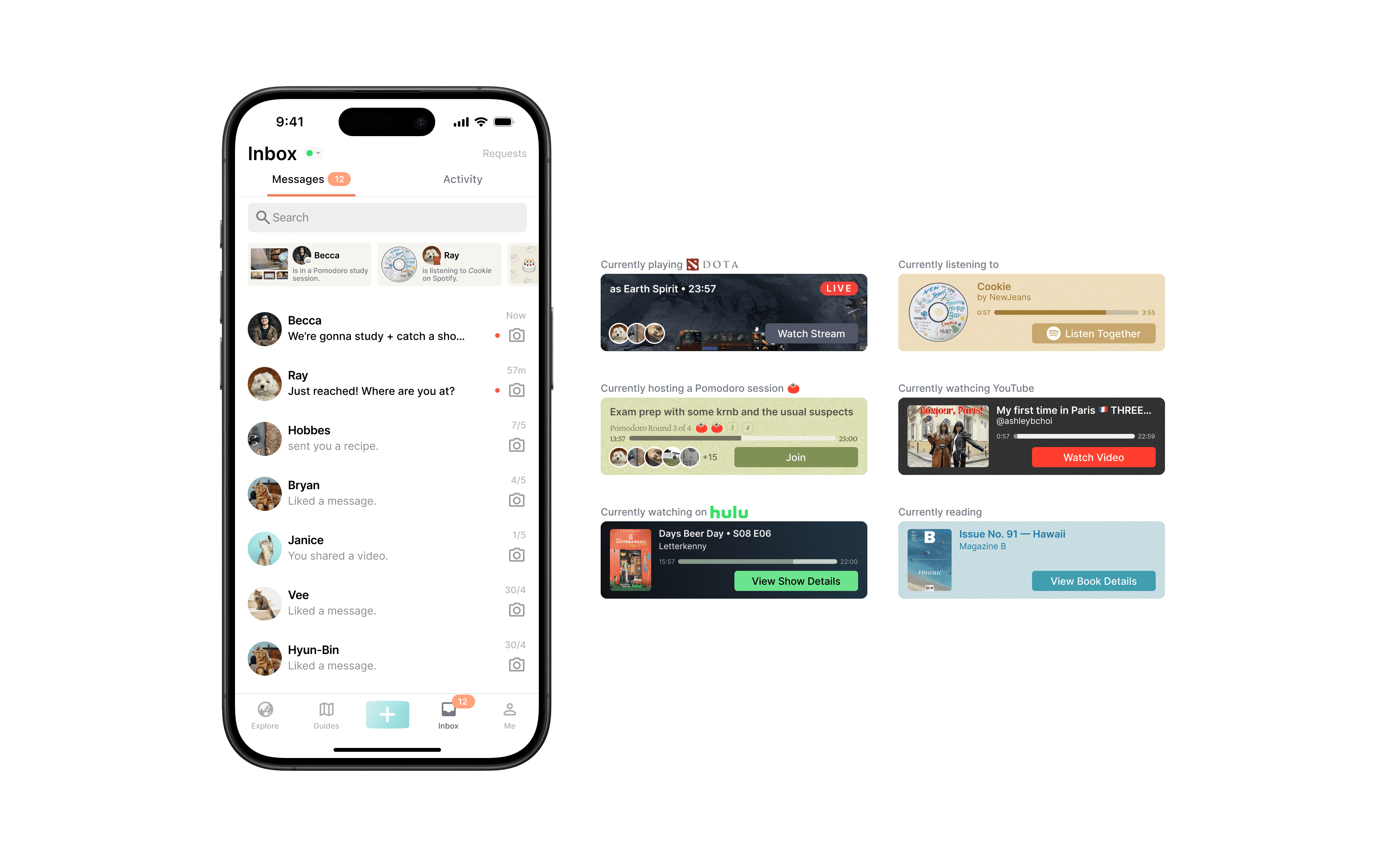
Digital Presence: Real-time Activity Updates
The Problem: Passive scrolling (consuming without interacting) is a primary driver of social isolation on platforms. Users feel like they are watching a broadcast rather than participating in a community.
The Solution: Synchronous Connectivity Insights Instead of static profiles, Glimpse surfaces real-time activity "glimpses" — showing what friends are currently listening to, reading, or exploring. This creates "digital serendipity," providing a natural bridge for users to start active conversations based on shared current experiences.
04
Reclaiming Identity: Expressive Profile Customisation
The Problem: Modern social platforms have "standardised" the user. Profiles are generic grids that force diverse personalities into a single, corporate template, leading to a "sameness" in how people present themselves.
The Solution: Modular Identity Skins Beyond standard photos, Glimpse offers extensive profile customisation through themes, modular layouts, and "skins." This allows users to treat their digital space like a personal room, showcasing different facets of their personality (e.g. a minimalist aesthetic for a designer vs. a vibrant, more organic layout for a gardener).
05
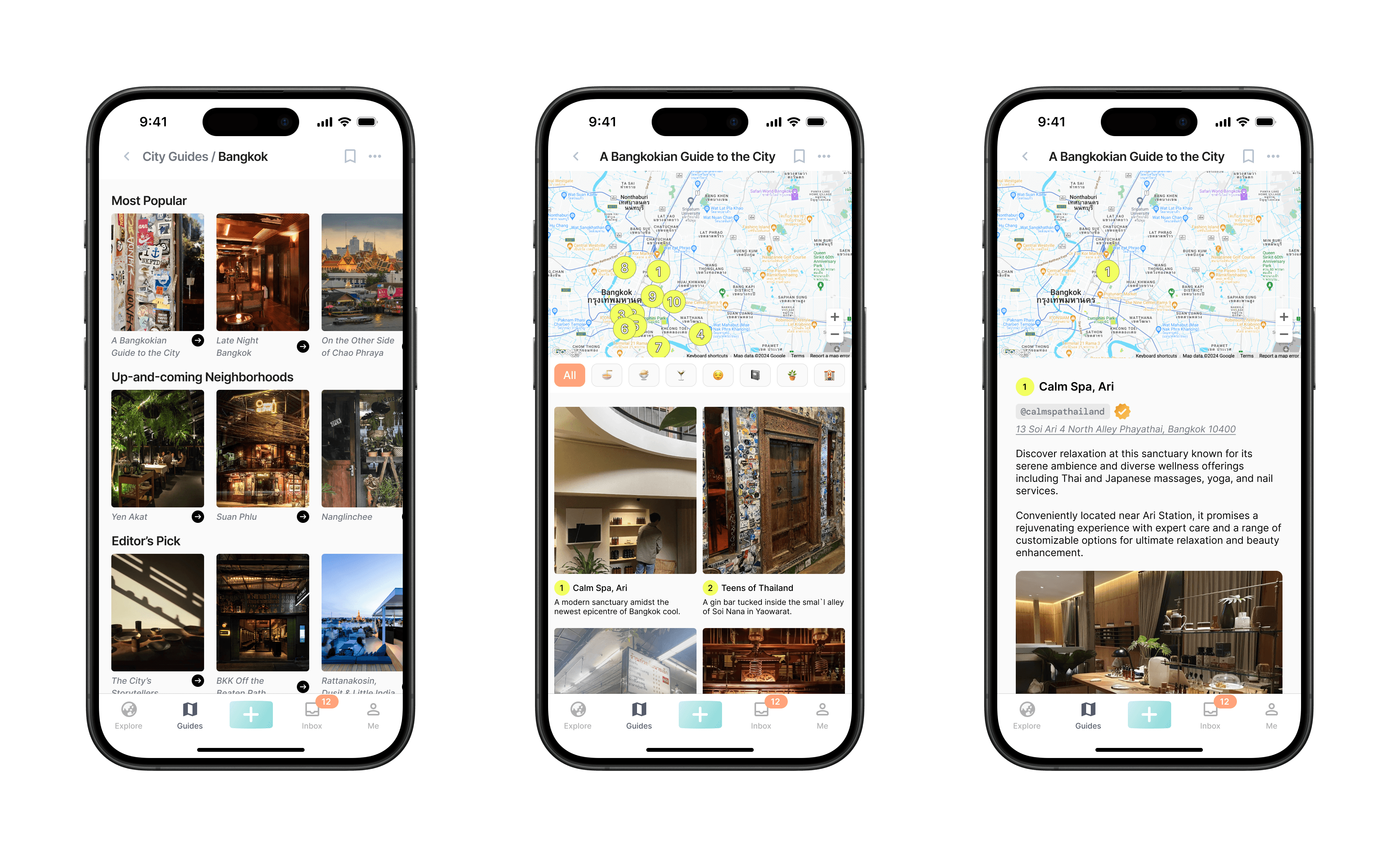
Information as Utility: The "Guides" Feature
The Problem: The "Influencer" model often prioritises aesthetic over value, burying useful information under promotional clutter and biased sponsored content.
The Solution: Collaborative Recommendation Engines Glimpse introduces "Guides" — themed, detailed recommendations created by users for their community. By moving from a "post" (temporary) to a "guide" (permanent utility), the platform rewards domain expertise and community value over viral vanity.
Product Strategy & Risk Mitigation (Self-Critique)
The Monetisation Paradox: Traditional social media relies on ad revenue (which requires high screen time). Glimpse would likely require an alternative revenue model (e.g. a marketplace for creators or premium "Guide" tiers) to avoid the engagement trap.
The Adoption Barrier: Users are habituated to instant gratification. Transitioning to a mindful, "slow" social app requires a significant shift in user mental models — a challenge that UX alone cannot solve without a cultural shift.
Free Speech vs. Moderation: There is a fine line between a "gentle nudge" and "censorship." The AI to be implemented must be transparent, allowing users to override nudges while maintaining awareness of the platform's community standards.
Reflections
Glimpse began as an exploration of toxic social patterns, but it evolved into a personal framework for Responsible Product Design.
Through this project, I’ve refined three core beliefs that I carry into my professional work:
Friction is a Tool, Not a Failure: In the race for "seamless" experiences, we often remove the moments of reflection that make us human. I’ve learnt how to use intentional friction (like the AI Nudge) to protect user wellbeing without sacrificing utility.
The Ethical Responsibility of AI: AI shouldn't just be an "assistant"; it should be a mediator. Glimpse taught me to look at AI through the lens of Sentiment Ethics, ensuring that automation serves to de-escalate conflict rather than amplify it.
Designing for Longevity over Engagement: True product success ought not to be measured by how many hours a user spends on a platform, but by the quality of the value they walk away with. This mindset is critical for building sustainable, trust-based products in today's digital age.